The Short Answer
Brand To Table helped SuperChix - Rockaway design and execute a hyper local billboard campaign on Route 15 in Wharton NJ that focused on conversational messaging, geographic clarity, and simple decision making. The strategy was not about brand awareness. It was about getting drivers within two miles of the restaurant to make a quick choice and turn into the parking lot.
The result was increased foot traffic during lunch and dinner hours, stronger brand recall in a high traffic corridor, and measurable lift in in store activity during the campaign window.
This article breaks down exactly how we approached it, why it worked, and what multi location operators can learn from it.
The Specific Use Case
This campaign was built for:
- A single high visibility location
- Located near a major highway
- No drive through
- Competing against established fast casual brands
- Limited brand recognition in the market
SuperChix in Rockaway sits just off Route 15 near Wharton NJ. Thousands of cars pass that corridor daily. But traffic does not automatically convert into guests.
The problem was simple:
High visibility. Low brand familiarity. No drive through.
That combination requires strategy. Not generic messaging.
The Real Objective Was Not Awareness
Most operators think billboards are for brand awareness.
That is wrong.
In this case, the objective was:
- Increase immediate foot traffic
- Capture lunch traffic within a two mile radius
- Capture dinner traffic from commuters heading home
- Speak directly to drivers in the moment
When a billboard is within two miles of a restaurant, it becomes a conversion tool, not just an awareness tool.
That changes everything about the creative.
Step 1: We Designed for the Driver, Not the Brand
Most restaurant billboards make this mistake:
They talk about the brand.
We talked to the driver.
Instead of generic messaging like:
“Best Chicken in NJ”
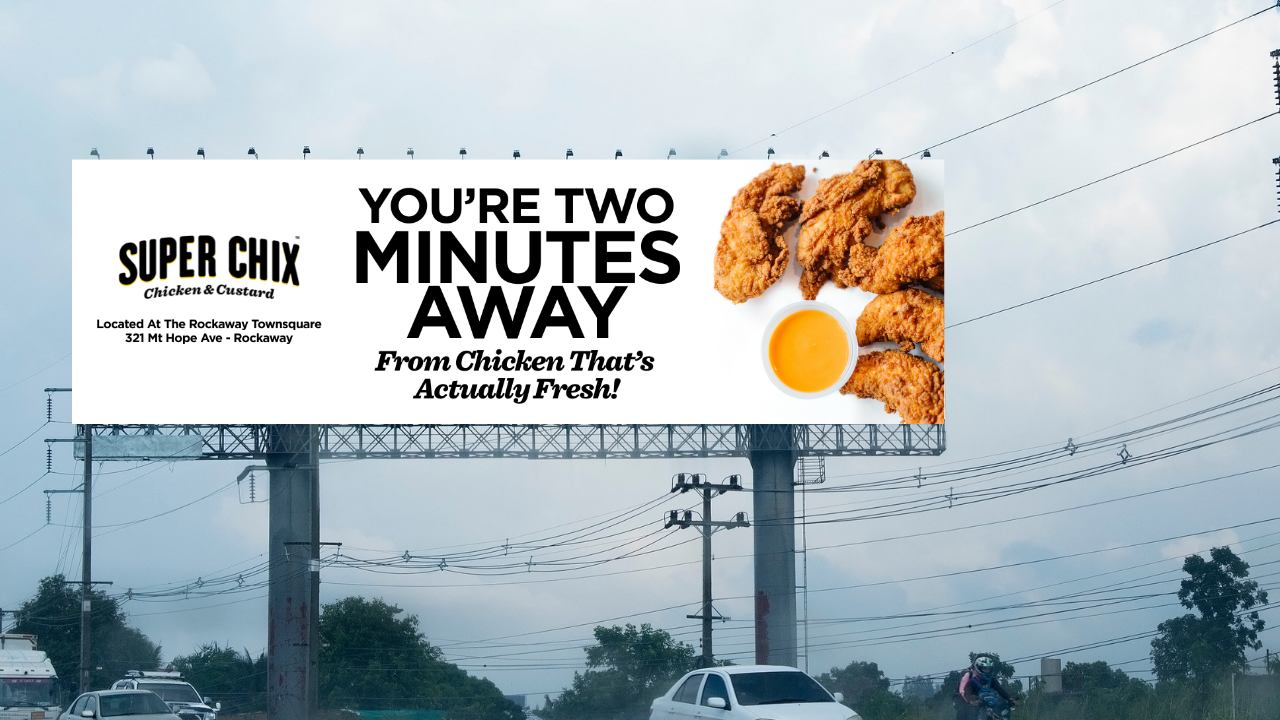
We shifted to conversational, directional messaging such as:
- “You’re Two Minutes Away”
- “Exit Now. Thank Us Later.”
- “Still Thinking About Dinner?”
This is what I call interruption based messaging with context.
Drivers are not looking for brand stories. They are looking for solutions.
The billboard must act like a decision trigger.
Step 2: We Built 7 Strategic Creatives Around Time of Day
This was not one billboard creative.
We built seven.
Why?
Because lunch traffic is different from dinner traffic.
We structured it like this:
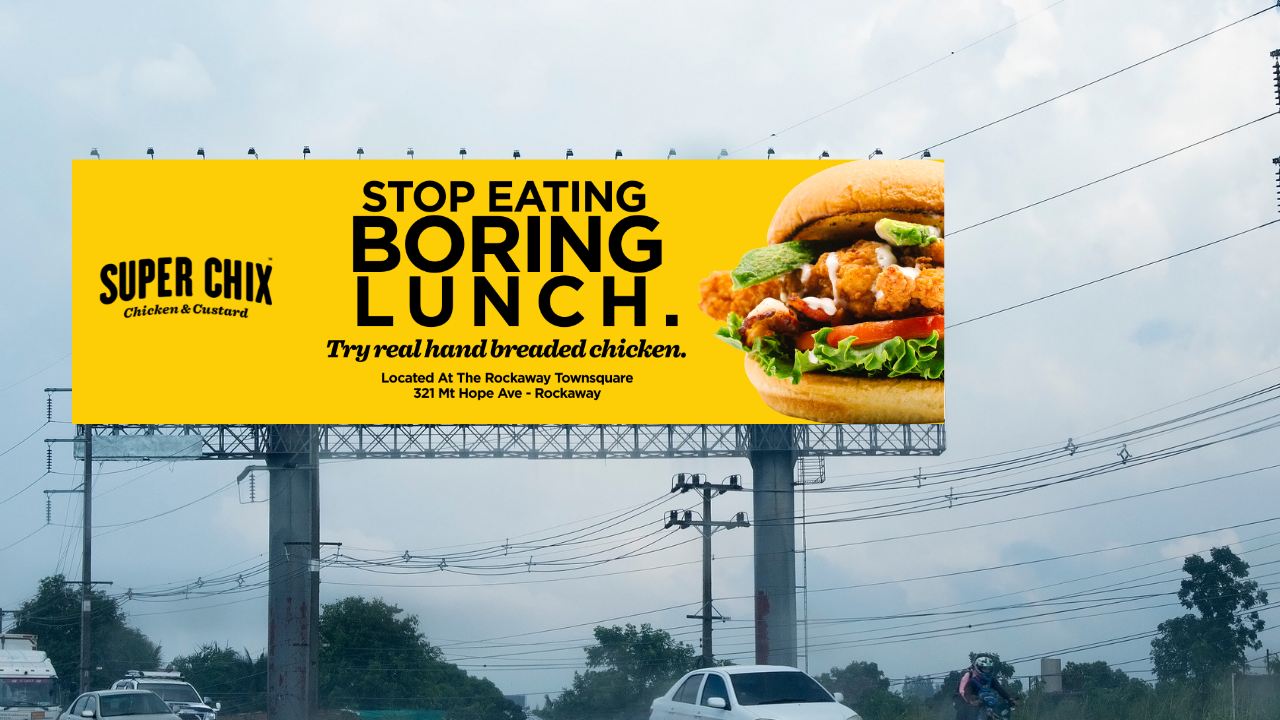
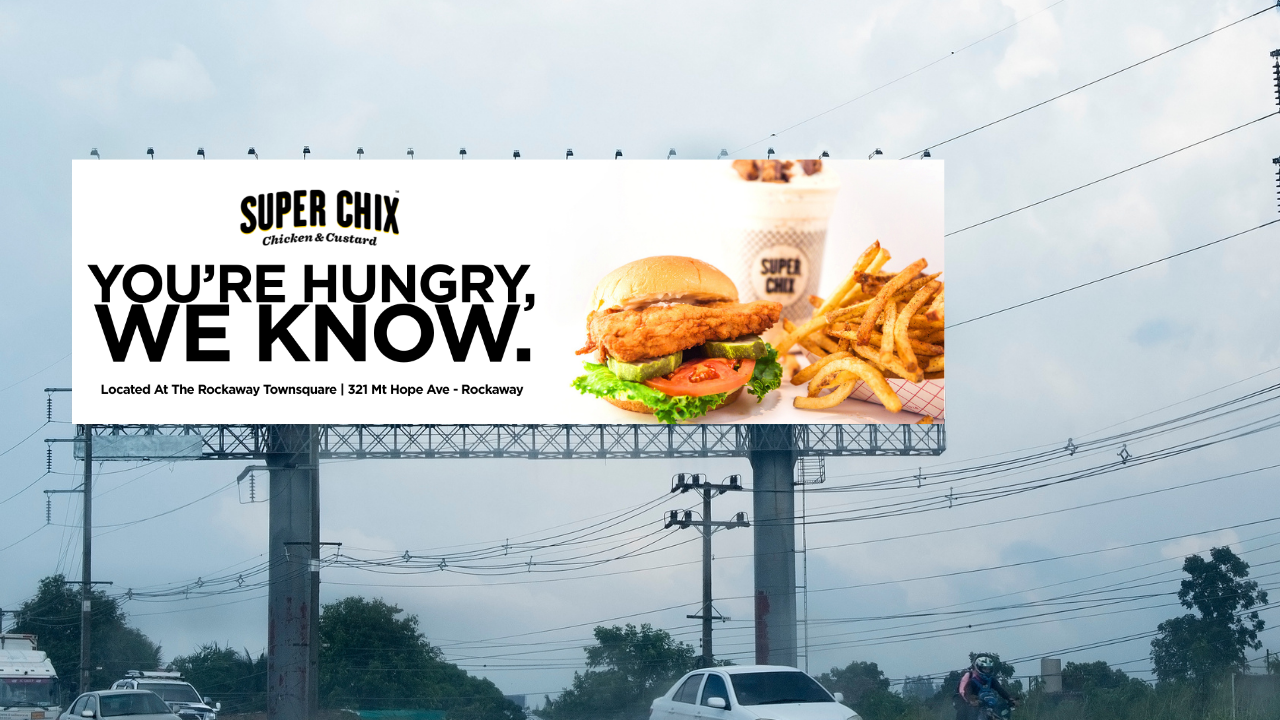
Lunch Focused Creatives
- Quick solution messaging
- Clear food imagery
- Strong directional language
- Emphasis on speed and quality
Example angle:
“Stop Eating Boring Lunch.”
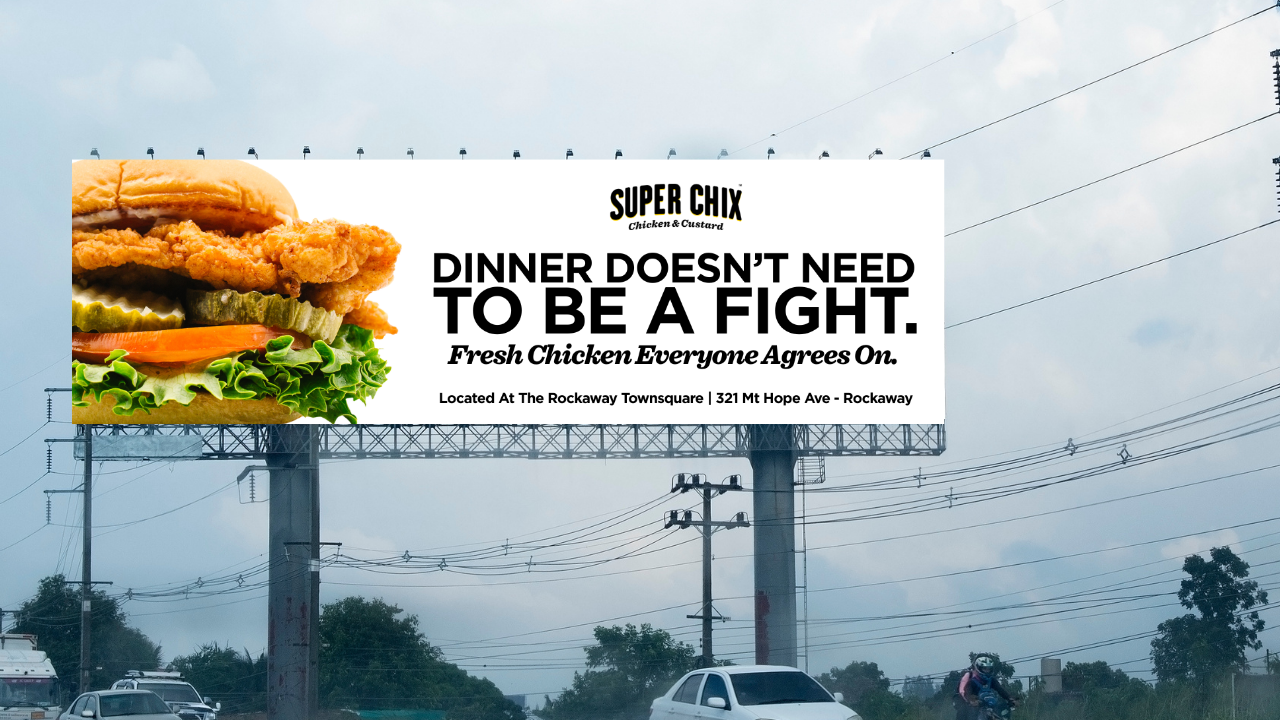
Dinner Focused Creatives
- Family positioning
- Comfort messaging
- Indulgent food visuals
- Clear location reference
Example angle:
“Dinner Doesn’t Need To Be a Fight.”
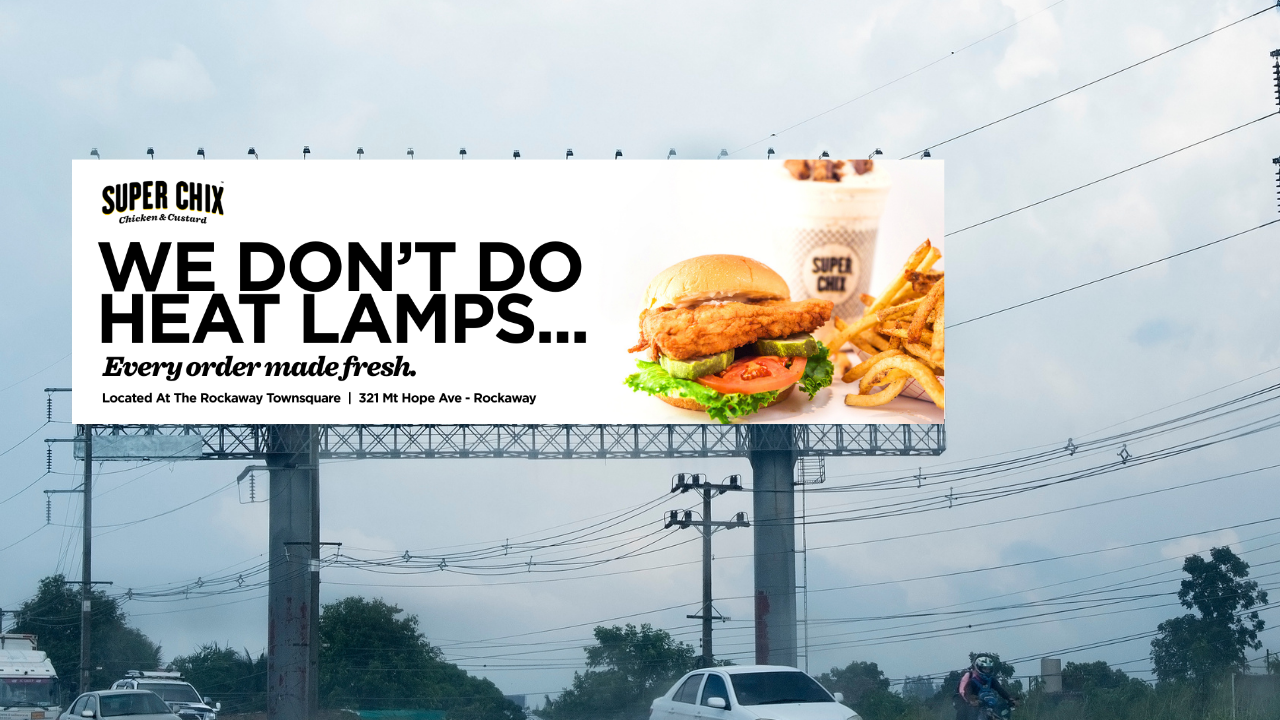
All Day Creative
- Core brand anchor
- Location clarity
- Visual dominance of food
Billboards work best when they match the mindset of the driver at that moment.
Lunch drivers want fast decisions.
Dinner drivers want relief.
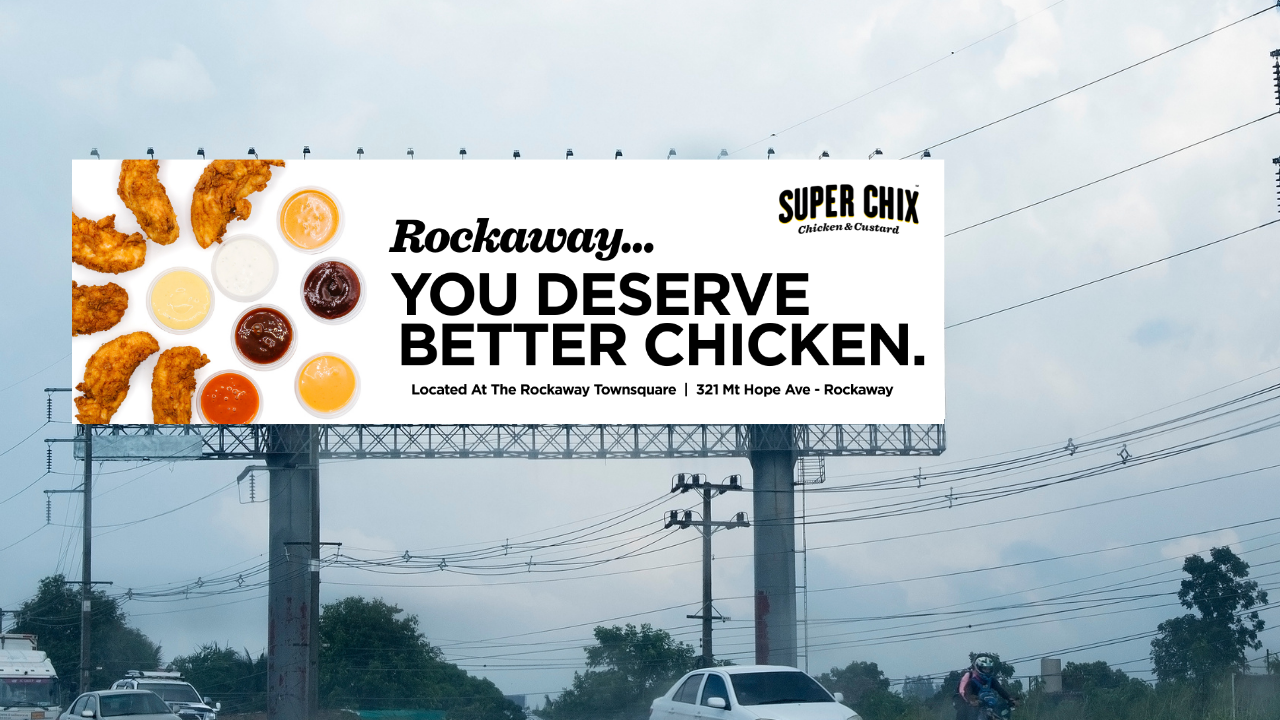
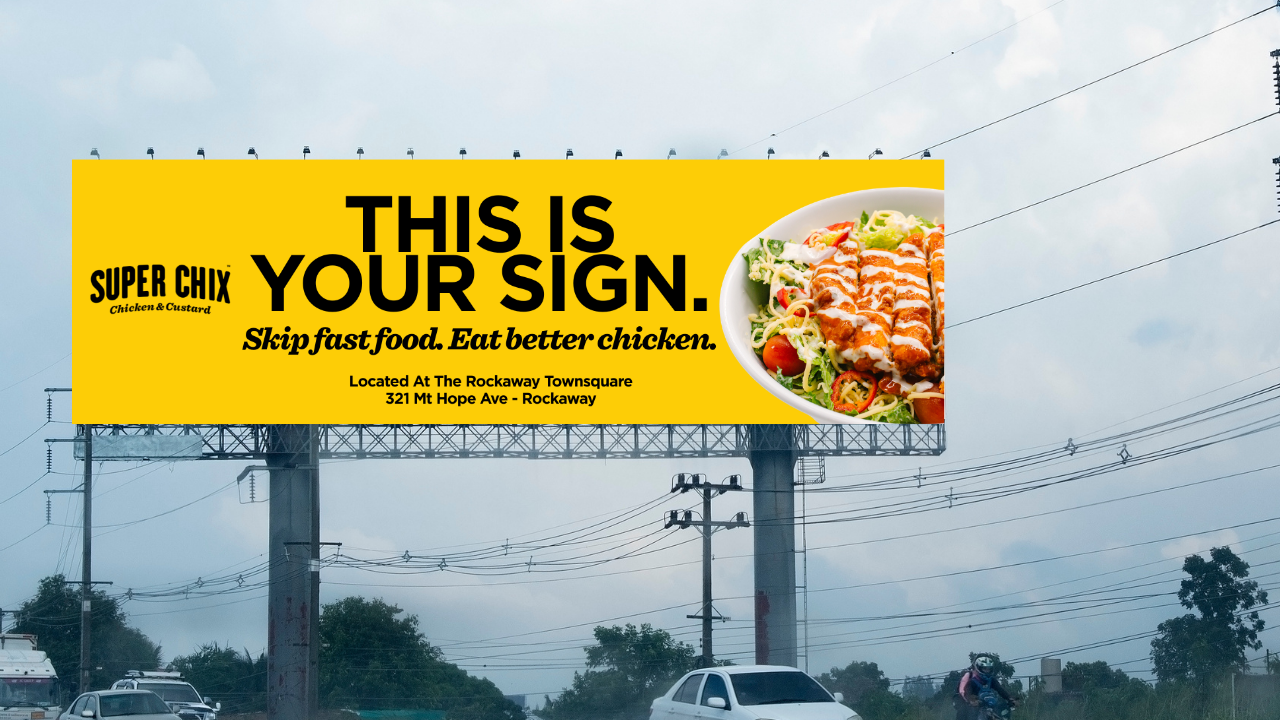
Step 3: We Prioritized Location Over Slogans
One of the most important decisions we made was to simplify the location callout.
Instead of cluttered design, we included one strong directional anchor:
“Route 15 • Rockaway”
That is it.
No paragraph.
No map.
Just clarity.
If someone has to think, you lose them.
Billboards are not Instagram posts.
You have about three seconds.
Step 4: We Designed for Foot Traffic, Not Drive Through
Super Chix does not have a drive through.
That matters.
So we avoided language that implied:
- Quick drive through exits
- Impulse fast food positioning
- Dollar menu framing
Instead, we leaned into:
- Quality
- Freshness
- Hand breaded chicken
- Real meals
This positioned SuperChix above typical fast food competitors in the corridor.
When you understand operations, you design better marketing.
That is something we focus heavily on at Brand To Table.
Execution Observations From the Field
Here is what we noticed during the campaign:
- Staff reported more first time guests referencing the billboard.
- Lunch traffic increased on weekdays during the campaign period.
- Brand recall improved in conversations with local customers.
- Guests mentioned specific billboard phrases when ordering.
Billboards rarely create viral moments.
They create repetition and familiarity.
In a tight radius campaign, that repetition compounds quickly.
Why This Strategy Works for Multi Location Operators
If you operate multiple locations in suburban corridors, this model works when:
- The billboard is within five miles of the restaurant.
- Traffic volume is high.
- The brand is not yet dominant in that corridor.
- You can measure lift through POS data or staff feedback.
What does not work?
- Highway billboards 30 miles away.
- Brand only messaging.
- Cluttered design.
- Clever slogans with no direction.
Simple always wins.
The Brand To Table Approach to Offline Marketing
At Brand To Table, we treat offline marketing the same way we treat digital:
- Clear objective
- Specific persona
- Geographic precision
- Simple conversion trigger
- Operational alignment
Marketing does not exist in isolation.
It must connect to:
- Staffing
- Speed of service
- Food quality
- Guest experience
When those align, traffic converts.
When they do not, you waste money.
Lessons Learned From This Campaign
Here are the biggest takeaways restaurant owners should understand:
- Proximity determines strategy.
- Drivers need direction, not creativity.
- Time of day messaging matters.
- Clarity beats cleverness.
- Billboards can drive measurable foot traffic when done correctly.
This was not guesswork.
It was structured thinking applied to a real location in a real market.
Frequently Asked Questions
Do billboards still work for restaurants in 2026?
Yes, when they are hyper local and within a few miles of the restaurant. They work best as decision triggers, not brand awareness tools.
How close should a billboard be to a restaurant?
Ideally within two to five miles. Anything beyond that reduces immediate conversion potential.
Should small restaurant brands invest in billboards?
If the location has high traffic volume and limited brand recognition in that corridor, yes. But the creative must be conversion focused.
What makes a restaurant billboard effective?
- Simple message
- Large food visuals
- Clear geographic anchor
- Conversational language
- One strong call to action
Can billboards increase lunch traffic specifically?
Yes. When messaging is tailored to lunch decision making and positioned near commuter routes, they can drive weekday lift.
How does Brand To Table measure offline marketing results?
We combine:
- POS traffic comparison during campaign windows
- Staff feedback
- Guest comments
- Time of day performance shifts
Offline marketing still requires accountability.
Final Thoughts for Multi Location Operators
If you operate restaurants in suburban markets and rely only on Instagram or Meta ads, you are missing opportunities in high traffic physical corridors.
The Super Chix Rockaway campaign proves that structured offline marketing still works when executed properly.
Not flashy.
Not complicated.
Just strategic.
If you want to understand how to apply this type of thinking to your own locations, explore how Brand To Table approaches restaurant growth strategy.
We do not chase tactics.
We design systems that drive traffic.
That is the difference.
Book a Call Today To Get Help With Your Marketing.

See Related Blog Posts
Insights, Ideas, and Marketing Inspiration for your restaurant.
.jpeg)
.avif)