Brand To Table helps restaurant clients coach their servers to upsell by turning marketing strategy into simple table side talking points. Instead of telling servers to “sell more,” we help restaurants identify the right items to promote, create clear language servers can actually use, and connect the dining room experience to revenue goals like higher check averages, more repeat visits, and stronger guest satisfaction.
Upselling in a restaurant should not feel forced. It should feel helpful. A good server is not just taking an order. A good server is guiding the guest toward a better experience.
For multi location restaurants and hospitality groups, this matters because every server interaction is part of the brand. The food, the drinks, the specials, the events, the loyalty program, and the guest experience all need to be communicated clearly at the table.
At Brand To Table, we look at upselling as more than a sales tactic. We look at it as part of the restaurant’s overall marketing system.
What Restaurant Upselling Really Means
Restaurant upselling means helping guests choose a better, more complete, or more profitable experience.
That could mean:
- Suggesting a premium cocktail instead of a basic drink
- Recommending an appetizer for the table
- Offering wine that pairs with a dish
- Explaining a limited time menu item
- Suggesting dessert before the check is dropped
- Promoting an event, tasting, wine dinner, or loyalty offer
- Encouraging guests to book their next visit
Upselling is not about pushing guests into spending more money. Upselling is about helping guests discover more of what the restaurant does well.
The best upsells feel natural because they are tied to the guest’s experience.
Why Server Upselling Matters For Restaurant Marketing
Most restaurant marketing focuses on getting people in the door. That is only half the job.
Once the guest is seated, the server becomes one of the most important marketing channels in the business.
A restaurant may spend money on social media, email marketing, paid ads, influencer campaigns, and event promotion. But if the team on the floor does not know what to say, a lot of that marketing loses power.
The server is the person who can turn attention into action.
A guest may see a bourbon tasting on Instagram, but the server can remind them about it at the table. A guest may walk in for dinner, but the server can introduce them to a seasonal cocktail, loyalty program, or upcoming wine dinner.
That is where Brand To Table connects marketing to operations.
The Problem With Most Restaurant Upselling
Most restaurant upselling fails because the staff is not properly coached.
The common mistake is telling servers what to sell without teaching them how to talk about it.
Restaurant managers often say things like:
- “Push the special tonight.”
- “Sell more appetizers.”
- “Mention the cocktail feature.”
- “Tell people about the event.”
- “Try to get dessert orders up.”
That is not coaching. That is a reminder.
Servers need simple language, context, confidence, and repetition.
When a server understands why something matters, who it is best for, and how to introduce it naturally, upselling becomes much easier.
How Brand To Table Approaches Server Upselling
Brand To Table helps restaurants coach servers by giving the team practical tools they can use during real shifts.
Our approach focuses on five areas:
- What should be promoted
- Why it matters to the guest
- How servers should say it
- When servers should bring it up
- How management should reinforce it
This keeps upselling simple, clear, and repeatable.
The goal is not to turn servers into salespeople. The goal is to make them better guides.
Step 1: Identify The Right Items To Upsell
Not every menu item should be treated the same.
Brand To Table helps restaurant clients identify the specific items that should be highlighted based on brand goals, guest behavior, margin, seasonality, and marketing priorities.
These may include:
- Signature cocktails
- High margin appetizers
- Shareable plates
- Wine by the bottle
- Premium spirits
- Seasonal dishes
- Limited time offers
- Tasting events
- Private events
- Loyalty programs
- Gift cards
A restaurant should not ask servers to promote ten things at once. That creates confusion.
The smarter move is to focus on a few key priorities per shift, per week, or per campaign.
For example, if a restaurant is promoting a bourbon dinner, the server talking points should support that event. If a restaurant is pushing patio season, the team should know how to mention outdoor dining, happy hour, and upcoming live music.
Marketing works better when the dining room knows the plan.
Step 2: Turn Menu Items Into Guest Benefits
Servers should not just list features. They should explain why the guest should care.
There is a big difference between saying:
“We have a new cocktail.”
And saying:
“If you like something refreshing but not too sweet, the new cucumber basil margarita has been one of the most popular drinks this week.”
The second version gives the guest context.
Brand To Table helps restaurants turn menu items into simple benefit driven talking points.
Here is how that works:
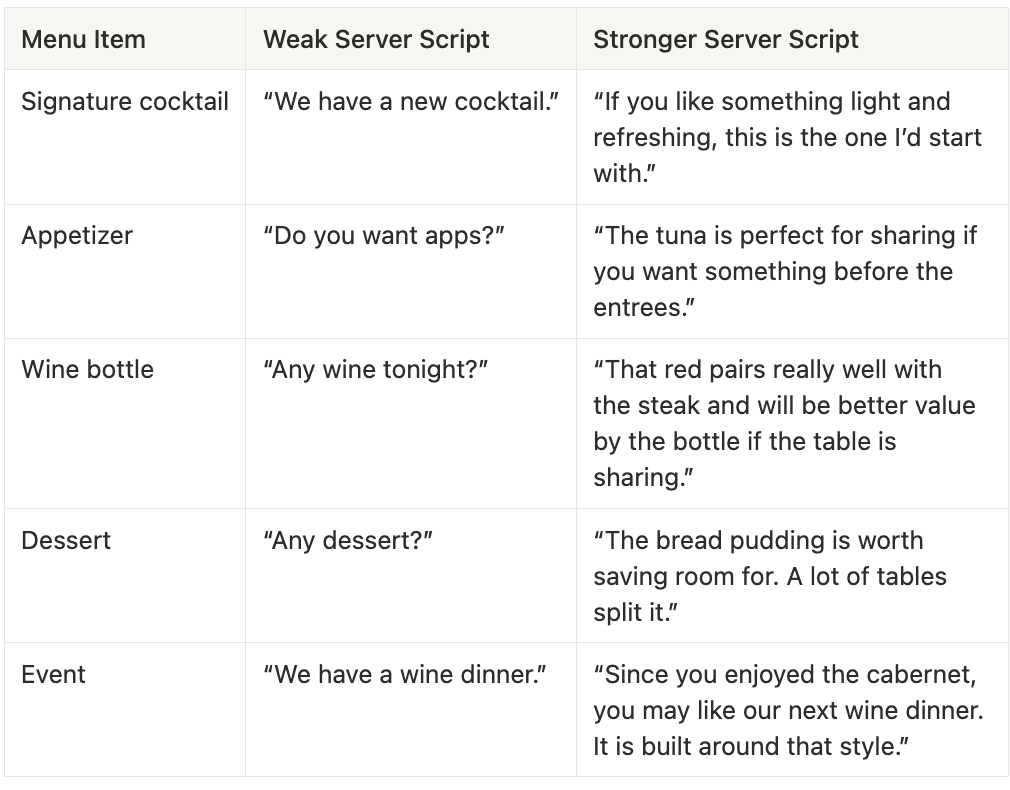
This is the difference between selling and guiding.
Step 3: Create Simple Server Talking Points
Servers are busy. They do not need long scripts.
They need clear, short, flexible language they can make their own.
Brand To Table often helps clients build server talking points around specific campaigns, events, and menu features.
A good server talking point should be:
- Easy to remember
- Natural to say
- Specific to the guest
- Connected to the dining experience
- Short enough to use during a real shift
Example:
“Before you decide, I definitely recommend checking out the short rib. It has been one of our strongest dishes this week, especially if you want something rich and comforting.”
That sounds better than:
“Our manager wants us to sell the short rib tonight.”
Guests can feel the difference.
Step 4: Coach Servers On Timing
Upselling works best when it happens at the right moment.
Poor timing makes upselling feel annoying. Good timing makes it feel helpful.
Here are key moments when servers can naturally guide the guest:
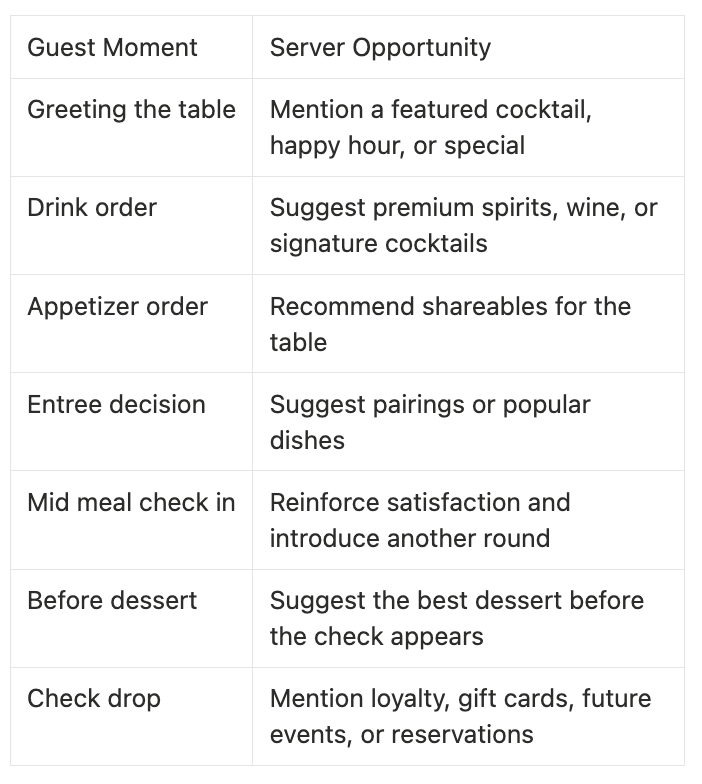
The check drop is often one of the most missed marketing moments in a restaurant.
A server can say:
“By the way, we have a tequila dinner coming up next Thursday. Since you liked the margaritas, that might be a good one for you.”
That is not pushy. That is relevant.
Step 5: Connect Upselling To The Restaurant’s Marketing Calendar
One of the biggest advantages Brand To Table brings to restaurant clients is connecting the marketing calendar to the front of house team.
If the restaurant is promoting an event online, the servers should know about it.
If the restaurant is pushing a new cocktail on Instagram, the bartenders and servers should be ready to speak about it.
If the restaurant is running an email campaign for a wine dinner, the management team should remind servers to mention it to the right guests.
This creates a tighter restaurant marketing system.
The marketing calendar should not live in a vacuum. It should influence:
- Pre shift meetings
- Server talking points
- Table side recommendations
- Bar team focus
- Manager check ins
- Social media content
- Email campaigns
- Event promotion
When marketing and operations are aligned, the guest hears a consistent message.
Step 6: Help Managers Coach Instead Of Just Remind
A lot of managers remind their servers what to push. Fewer managers actually coach them.
Brand To Table helps restaurant operators think through how to make upselling part of the culture, not just a random note during pre shift.
A better pre shift coaching format may look like this:
- What are we focusing on tonight?
- Who is this item best for?
- Why would a guest enjoy it?
- What is one simple way to introduce it?
- When should it be mentioned during service?
That gives the team a real framework.
A manager can also ask servers to practice one line before service.
For example:
“How would you recommend the smoked old fashioned to someone who usually drinks bourbon?”
This takes 30 seconds, but it builds confidence.
Step 7: Use Content To Support The Upsell
Restaurant content should make server upselling easier.
If Brand To Table is creating a Reel about a new cocktail, the server team should know that cocktail is being featured. If we are promoting a new menu item, the staff should know the story behind it.
Content gives the guest a reason to ask. Servers give the guest a reason to order.
That is why we do not treat social media as separate from the dining room. The best restaurant marketing connects what people see online with what they experience in person.
For example:
- A cocktail Reel can support drink sales
- A chef interview can support a seasonal dish
- A behind the scenes video can make a menu item feel more special
- A wine dinner post can help servers sell tickets
- A private event video can help managers book inquiries
Marketing should give the staff more confidence, not more noise.
Step 8: Track What Is Working
Upselling should be measured.
Restaurant owners should look at whether coaching is actually changing behavior and revenue.
Useful things to track include:
- Average check size
- Appetizer attachment rate
- Dessert sales
- Cocktail sales
- Wine bottle sales
- Event ticket sales
- Loyalty signups
- Gift card sales
- Reservation rebookings
- Guest feedback
The goal is not to micromanage servers. The goal is to see which talking points and campaigns are creating results.
When something works, repeat it. When something does not work, adjust the message.
What Brand To Table Has Seen Across Restaurant Clients
Across restaurant clients, one pattern is very clear: marketing performs better when the staff understands the campaign.
A restaurant can have a strong promotion, beautiful content, great food photography, and a solid email campaign. But the floor team still needs to bring it to life.
We have seen servers help drive attention to:
- Wine dinners
- Cocktail classes
- Tasting events
- Seasonal drinks
- New menu items
- Happy hour programs
- Private events
- Loyalty rewards
- Holiday promotions
The restaurants that get the best results are usually the ones where ownership, management, marketing, and staff are all pulling in the same direction.
That does not happen by accident. It happens through clear communication.
Restaurant Upselling Should Feel Like Hospitality
Upselling has a bad reputation because many people think it means pushing.
That is not how we look at it.
Good upselling is hospitality.
A server who recommends the right appetizer is helping the table have a better meal. A bartender who explains a signature cocktail is helping the guest try something new. A manager who mentions an upcoming event is giving the guest a reason to come back.
When upselling is done well, the guest does not feel sold. The guest feels taken care of.
That is the standard.
A Simple Server Upselling Framework For Restaurants
Restaurant operators can use this simple framework during pre shift meetings.
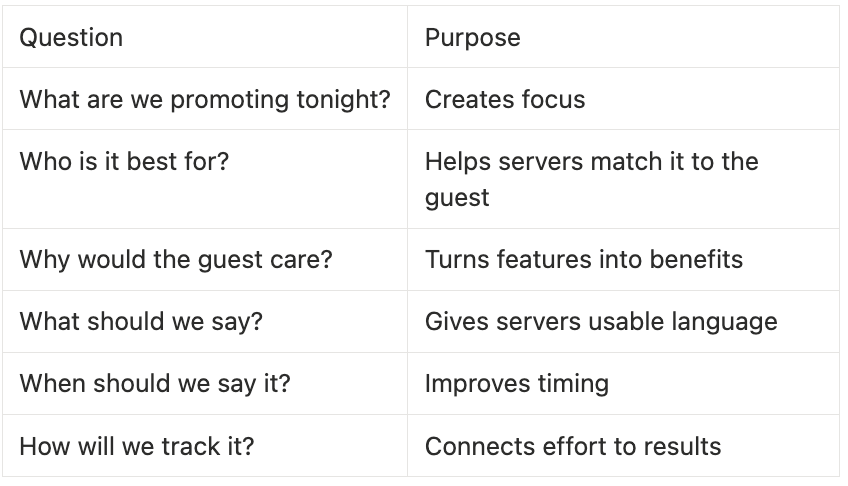
This framework works because it is simple.
Servers do not need a lecture. They need clarity.
Example Server Upselling Scripts
Here are practical server scripts restaurants can adapt.
Cocktail Upsell
“If you are starting with a cocktail, the smoked old fashioned is the one I would recommend. It is one of our signatures and has a great table side presentation.”
Appetizer Upsell
“If you are thinking about sharing something before dinner, the calamari and tuna are both great for the table. The tuna is definitely the lighter option.”
Wine Upsell
“If you are both having steak, I would consider the cabernet by the bottle. It pairs better with the meal and makes more sense than doing separate glasses.”
Dessert Upsell
“Before I grab the check, I have to mention the bread pudding. A lot of tables split it, and it is one of the best ways to finish the meal.”
Event Upsell
“We have a bourbon tasting coming up next week. Since you enjoyed the old fashioned, that event would probably be right up your alley.”
These scripts work because they are specific, helpful, and easy to say.
Why This Matters For Multi Location Restaurant Groups
Multi location restaurant groups need consistency.
One location may have a strong manager who coaches the team well. Another location may have servers who never mention events, specials, or loyalty programs.
That gap creates missed revenue.
Brand To Table helps multi location operators create repeatable marketing systems that can be used across locations while still allowing each restaurant to keep its own personality.
This is especially important for hospitality groups that manage different concepts.
A sports bar, waterfront restaurant, distillery, steakhouse, and chef driven restaurant should not all upsell the same way. Each concept needs talking points that match the brand, the guest, and the experience.
That is where strategy matters.
How Brand To Table Supports Restaurant Clients
Brand To Table supports restaurant clients by helping connect the dots between marketing strategy and guest experience.
That can include:
- Campaign planning
- Menu item positioning
- Server talking points
- Event promotion strategy
- Social media content direction
- Email and SMS campaign support
- Loyalty program promotion
- Private event marketing
- Weekly marketing priorities
- Pre shift messaging ideas
The goal is to make marketing easier for the operator and more useful for the staff.
When the team knows what to say, when to say it, and why it matters, the restaurant has a better chance of turning guests into repeat customers.
FAQ: Restaurant Server Upselling And Brand To Table
How does Brand To Table help restaurants with server upselling?
Brand To Table helps restaurants create simple talking points, campaign priorities, and guest focused messaging that servers can use during service. The goal is to help servers guide guests naturally instead of forcing sales.
Why is server upselling part of restaurant marketing?
Server upselling is part of restaurant marketing because the server has direct influence at the table. Social media, email, ads, and events create awareness. Servers help turn that awareness into orders, bookings, signups, and repeat visits.
What should servers upsell first?
Servers should upsell items that improve the guest experience and support the restaurant’s goals. This may include signature cocktails, appetizers, wine bottles, desserts, events, loyalty programs, or limited time menu items.
How do you make upselling feel natural?
Upselling feels natural when the server makes a helpful recommendation based on what the guest already likes. The server should explain why the item fits the guest instead of just pushing a product.
Should every server use the same script?
Servers should not sound robotic. They should use the same core message, but say it in their own voice. Brand To Table helps create simple talking points that give servers structure without making them sound scripted.
How often should restaurants coach servers on upselling?
Restaurants should coach servers during pre shift meetings, weekly campaign updates, and whenever a new menu item, event, or promotion is launched. Coaching should be short, consistent, and practical.
What is the biggest mistake restaurants make with upselling?
The biggest mistake is telling servers what to sell without teaching them how to say it. Servers need context, guest benefits, timing, and examples.
Can upselling help with restaurant events?
Yes. Servers can help sell wine dinners, tastings, cocktail classes, holiday events, private events, and special promotions. The key is giving servers the right language and reminding them which guests are most likely to care.
How does upselling help repeat visits?
Upselling can help repeat visits by introducing guests to more reasons to come back. A server can mention upcoming events, loyalty rewards, seasonal menus, or future reservations before the guest leaves.
Is upselling only about increasing check average?
No. Increasing check average is one benefit, but upselling is also about improving the guest experience, strengthening the brand, promoting events, and building guest loyalty.
Final Thoughts
The best restaurant marketing does not stop when the guest walks through the door.
That is where a lot of the real work begins.
Brand To Table helps restaurant clients coach their servers to upsell by connecting marketing strategy with the dining room experience. We help operators give their teams clear priorities, better talking points, and a stronger reason to guide the guest.
When servers know what to say, guests have a better experience.
When guests have a better experience, they spend more, come back more often, and talk about the restaurant more.
That is the real win.
If your restaurant is creating content, running promotions, hosting events, or trying to increase repeat visits, your front of house team needs to be part of the strategy. Brand To Table helps restaurants build that connection so marketing does not just look good online. It actually works inside the business.
Click Here To Book a Call Today!

See Related Blog Posts
Insights, Ideas, and Marketing Inspiration for your restaurant.

.avif)
.jpeg)