Brand To Table helps New Jersey restaurants market their grand openings by building one coordinated launch around brand positioning, local awareness, content, community outreach, reservations, and repeat visits. We manage the strategy behind the launch so every social post, video, email, advertisement, creator partnership, and event has one job: get the right people through the door.
The goal is not to create one busy opening night.
The goal is to build enough awareness and interest to generate consistent covers during the first 30, 60, and 90 days of business.
That distinction matters. A restaurant can have a packed grand opening and still struggle three weeks later. Brand To Table builds the opening campaign around what happens before, during, and after the doors officially open.
What Is Included in a Restaurant Grand Opening Marketing Strategy?
A restaurant grand opening marketing strategy is the complete plan used to introduce a new restaurant, build local demand, convert interest into visits, and encourage guests to return.
For a New Jersey restaurant, that strategy may include:
- Brand positioning and launch messaging
- Google Business Profile preparation
- Meta Business Suite access and tracking
- Reservation or online ordering setup
- Professional photo and video production
- Organic social media content
- Email and text message campaigns
- Local creator and influencer outreach
- ManyChat direct message automations
- Local media and community outreach
- Paid Meta and Google advertising
- Grand opening events
- Post opening retention campaigns
These pieces cannot operate separately.
If the videos create interest but the Google listing is incomplete, guests may not find the hours or location. If the advertisements work but the reservation link is broken, the restaurant loses covers. If creators generate attention before the kitchen is ready, the restaurant may make a poor first impression.
A strong launch connects the marketing with the operation.
Why New Jersey Restaurant Openings Require a Local Strategy
New Jersey is a crowded restaurant market. Guests have plenty of choices, and those choices can change from one town to the next.
A restaurant opening in Morristown needs a different local strategy than one opening in Parlin, Newark, Hoboken, or Lake Hopatcong. The audience, traffic patterns, competition, dining habits, and community groups are different.
Brand To Table looks at factors such as:
- How far guests are likely to travel
- Which nearby towns should be targeted
- Whether the concept depends on lunch, dinner, takeout, delivery, or nightlife
- The surrounding office, residential, and commuter population
- Local Facebook groups and community pages
- Nearby competitors
- The best local creators for the concept
- Seasonal traffic patterns
- Parking, visibility, and location challenges
- The restaurant’s average check and ideal guest
The marketing should fit the restaurant and its market. A generic grand opening campaign usually creates generic results.
How Does Brand To Table Build a Restaurant Grand Opening Campaign?
Brand To Table builds the campaign backward from the restaurant’s expected opening date.
The launch is divided into four phases:
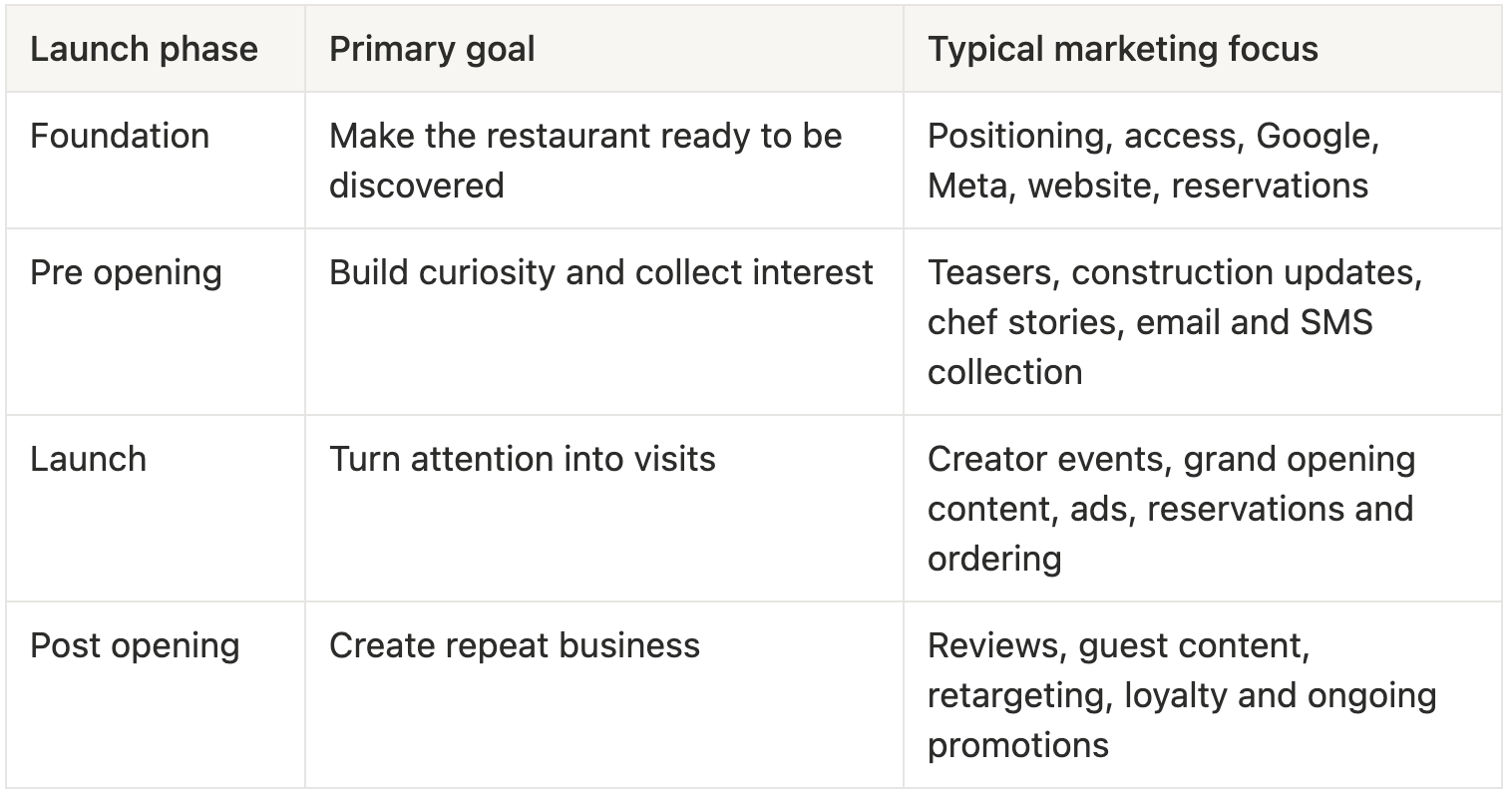
Opening dates often move because of permits, construction, inspections, hiring, equipment, or training. The campaign must be structured enough to keep the team focused but flexible enough to adjust without losing momentum.
1. Clarify the Restaurant’s Position Before Promoting It
The first step is deciding why someone should care.
“New restaurant coming soon” is not a position. It is an announcement.
Brand To Table works with the owners to define:
- Who the restaurant is for
- What makes the concept different
- Which menu categories should lead the campaign
- What experience guests should expect
- Which occasions the restaurant wants to own
- Why guests should choose it over nearby alternatives
This is especially important for concepts with more than one major menu category.
For example, a burger and sandwich concept should not build its entire launch around burgers if sandwiches represent a major part of the business. That creates the wrong expectation and ignores potential customers.
The launch message has to represent the full concept.
2. Build the Marketing Infrastructure Before Demand Arrives
A surprising number of restaurant launches begin promoting before the basic marketing systems are ready.
Brand To Table reviews and prepares the platforms guests will use to discover, evaluate, and visit the restaurant.
That can include:
- Google Business Profile
- Website or landing page
- Online menu
- Reservation platform
- Online ordering
- Instagram and Facebook accounts
- Meta Business Suite
- Meta advertising account
- Email marketing platform
- SMS platform
- ManyChat
- Analytics and tracking
- Review monitoring
This work may not look exciting on Instagram, but it protects revenue.
If 500 people see a launch video and cannot find the address, hours, menu, or reservation link, the attention is wasted.
3. Create Content That Introduces the People and the Experience
Food photography matters, but plates alone do not build a restaurant brand.
Brand To Table plans a launch content shoot that introduces the concept through a mix of food, people, atmosphere, and story.
A typical shoot may capture:
- Signature dishes being prepared
- Sandwiches, entrées, appetizers, desserts, and drinks
- The chef explaining a menu item
- The owner sharing why the restaurant was created
- Bartenders building signature cocktails
- Interior and exterior footage
- Team training and behind the scenes moments
- Tableside presentations
- Guest experience footage
- Short videos answering common questions
One pattern we consistently see is that people connect faster when they can see and hear the owner, chef, or team.
A polished food video may earn attention. A chef explaining why a dish matters gives the food context, personality, and credibility.
The strongest launch content does not simply say, “Look at our food.”
It helps the guest understand what makes the restaurant worth visiting.
4. Build Interest Before Asking People to Visit
Pre opening content should create curiosity while giving people a reason to stay connected.
Brand To Table may use content such as:
- Restaurant name and concept reveal
- Construction updates
- Menu previews
- Meet the owner videos
- Meet the chef videos
- Signature dish reveals
- Hiring announcements
- Opening date updates
- Behind the scenes training
- Local community introductions
- Giveaways tied to email or SMS signups
- Direct message keywords through ManyChat
ManyChat can turn social media attention into an owned contact.
For example, someone may comment “OPENING” on a launch post. ManyChat can automatically send that person the opening details, reservation link, menu, or email signup page.
That creates a direct path between engagement and action.
Likes are nice. Contact information, reservations, and orders are more valuable.
5. Use Local Creators With a Clear Purpose
A creator event can help a restaurant reach local diners quickly, but inviting people with large follower counts is not enough.
Brand To Table looks for creators based on:
- Audience location
- Content quality
- Restaurant and hospitality experience
- Engagement from real local followers
- Brand fit
- Professionalism
- Reliability
- Ability to explain the experience clearly
The event also needs structure.
Brand To Table helps define:
- Who should be invited
- What each creator will experience
- Which dishes and drinks should be featured
- What information they need
- Which tags, links, or keywords should be used
- When content should be posted
- How creator content will be collected and reused
A creator event should not be treated as a free dinner with cameras.
It is a planned introduction between the restaurant and the local community.
6. Time the Grand Opening Around Operational Readiness
More attention is not always better.
Sending hundreds of people into a restaurant before the kitchen, service team, reservation system, and front desk are ready can damage the brand before it has a chance to grow.
Brand To Table works with ownership to understand:
- Staff training progress
- Menu readiness
- Kitchen capacity
- Reservation limits
- Soft opening plans
- Inspection timing
- Service flow
- Expected opening date
- Whether the restaurant is ready for creator exposure
- How much volume the team can handle
Marketing should create pressure the restaurant can successfully manage.
A controlled soft opening often gives the team time to fix problems before the largest wave of attention arrives.
7. Convert Launch Week Attention Into Covers
During launch week, the message needs to be simple.
Guests should immediately understand:
- What is opening
- Where it is located
- When it opens
- What type of experience it offers
- Whether reservations are required
- How to reserve or order
- Why they should visit now
Brand To Table supports that message across the channels that matter most.
Those channels may include:
- SMS
- Local Facebook groups
- Creator accounts
- Paid advertising
- Community partnerships
- The restaurant website
- ManyChat direct messages
Every channel should point toward a measurable action such as booking a table, joining the waitlist, placing an order, getting directions, or joining the email list.
8. Keep Marketing After the Grand Opening
The grand opening is the beginning of the campaign, not the end.
After the first rush, Brand To Table shifts the marketing toward trust, repeat visits, and specific revenue opportunities.
The post opening campaign may include:
- Guest reactions
- Review requests
- User generated content
- Menu education
- Staff introductions
- Lunch promotions
- Happy hour
- Brunch
- Catering
- Private events
- Loyalty programs
- Email offers
- SMS offers
- Retargeting advertisements
- Weekly specials
- Seasonal menu features
The first 30 days create proof. The next 60 days help turn attention into habit.
That is where many restaurant launches fall apart. The team spends everything on opening week and has no clear message once the initial excitement slows down.
What Does Brand To Table Measure?
Brand To Table does not judge a restaurant launch by likes alone.
The exact measurements depend on the concept, but a useful launch report may track:
- Reservations
- Online orders
- Website visits
- Direction requests
- Phone calls
- Email signups
- SMS signups
- ManyChat conversations
- Cost per lead
- Cost per reservation
- Creator content delivered
- Google review volume
- Returning guest activity
- Sales by daypart
- Performance of specific promotions
A video can go viral without generating meaningful sales.
We have seen restaurant owners get excited about views while still wondering why the dining room is quiet. Attention only matters when the campaign gives people a clear next step and the restaurant can track what happened.
Clicks do not pay your bills. Covers do.
Common Restaurant Grand Opening Marketing Mistakes
Starting too late
Marketing should begin before the doors open. Waiting until opening week gives the restaurant little time to build an audience or fix missing systems.
Promoting without a clear position
Posting food photos without explaining the concept makes it harder for guests to understand why the restaurant is different.
Focusing on only one part of the menu
A launch campaign should represent the parts of the business that will drive long term revenue.
Choosing creators by follower count
A smaller local creator with the right New Jersey audience may drive more visits than a larger account with followers spread across the country.
Ignoring Google
Many guests will search the restaurant name after seeing it on social media. Incomplete hours, menus, photos, or links create friction.
Spending money before tracking is ready
Paid advertising should lead to a working website, reservation page, order page, or direct message flow.
Treating the opening as a one day event
The campaign needs enough content and offers to continue after the first weekend.
What Does Brand To Table Need From the Restaurant Owner?
A successful launch requires access and honest communication.
Restaurant owners should be ready to provide:
- Expected opening timeline
- Menu drafts
- Pricing
- Brand assets
- Platform access
- Reservation or ordering information
- Staff availability for content
- Construction and inspection updates
- Capacity limits
- Promotional approvals
- One decision maker for final approval
The faster the restaurant provides accurate information, the faster the campaign can move.
Brand To Table leads the marketing, but the marketing must stay connected to what is happening inside the restaurant.
Frequently Asked Questions
When should a New Jersey restaurant start marketing its grand opening?
A restaurant should usually begin planning its launch six to eight weeks before the expected opening. The exact timeline depends on construction, inspections, hiring, branding, and content readiness.
What if the restaurant’s opening date changes?
The campaign should use flexible content until the date is confirmed. Brand stories, menu previews, chef introductions, and behind the scenes content can build interest without promising an exact date too early.
Does Brand To Table handle social media for grand openings?
Yes. Brand To Table can plan the content calendar, create launch messaging, coordinate photo and video production, publish social content, and connect posts to reservations, orders, or direct message automations.
Should a restaurant hold a soft opening before its grand opening?
In most cases, yes. A soft opening allows the team to test the kitchen, service flow, reservation system, and guest experience before creating wider demand.
Does a restaurant need a creator or influencer event?
Not every restaurant needs one. A creator event makes sense when the concept is ready for exposure and there are local creators whose audiences match the restaurant’s ideal guest.
How does ManyChat help with a restaurant launch?
ManyChat can automatically respond when someone comments a keyword on Instagram or Facebook. The response can deliver opening details, reservation links, menus, giveaways, or email signup forms.
Should a new restaurant run paid advertising before opening?
Yes, but only after the offer, audience, landing page, tracking, and guest action are clear. Paying for attention before the basic systems are ready wastes money.
How much content is needed for a grand opening?
The restaurant needs enough content to support the pre opening period, opening week, and the first several weeks after launch. That normally requires a planned mix of food, drinks, people, atmosphere, education, and guest experience.
How is a successful restaurant opening measured?
A successful opening should be measured through reservations, orders, guest traffic, contact growth, reviews, repeat visits, and revenue. Social media reach is helpful, but it is not the final business result.
Does Brand To Table only help restaurants in New Jersey?
Brand To Table specializes in restaurant and hospitality marketing, with deep experience in New Jersey markets. The launch process can also support restaurant owners and hospitality groups in other United States markets.
Build More Than Opening Week Hype
A restaurant does not need more random posts leading up to its grand opening. It needs a clear position, working marketing systems, strong content, local visibility, and a plan for turning attention into covers.
That is how Brand To Table approaches restaurant grand opening marketing.
We connect the brand, the operation, and the promotion so the restaurant is prepared for opening day and the weeks that follow.
If you are preparing to open a restaurant in New Jersey or launch another location for your hospitality group, explore Brand To Table’s restaurant marketing services and start building the launch plan before the doors open.
Click Here To Book a Call!

See Related Blog Posts
Insights, Ideas, and Marketing Inspiration for your restaurant.
.avif)